

Customers expect more than they ever have before. They want fast service, personalized recommendations, and seamless interactions across every device they own. Meeting these expectations is no small feat—but it’s exactly where digital business and innovation step in. Companies that embrace new technology aren’t just keeping up. They’re reshaping how people shop, bank, communicate, and solve everyday problems. From AI-powered chatbots to mobile-first banking apps, innovation has become the backbone of a great customer experience.
In this post, we’ll explore how digital transformation reshapes customer relationships, the specific tools driving this change, and practical ways your organization can put these ideas into action. Whether you run a retail brand, a financial institution, or a small local business, you’ll walk away with a clearer picture of how technology can deepen customer loyalty.
What Is Digital Business and Innovation?
Digital business refers to the use of digital technologies to create new value in business models, customer experiences, and internal operations. Innovation is the engine that drives this value—the constant search for better, faster, and smarter ways to serve people.
Together, digital business and innovation describe a mindset as much as a set of tools. It’s about questioning old assumptions and asking, “Is there a better way to do this?” Sometimes the answer is a sleek new app. Other times it’s a behind-the-scenes process that makes a product cheaper or a delivery faster.
The key thing to remember is that innovation isn’t only about technology for its own sake. The best innovative product ideas always circle back to one goal: making life easier and more enjoyable for the customer.
Why Customer Experience Depends on Digital Innovation
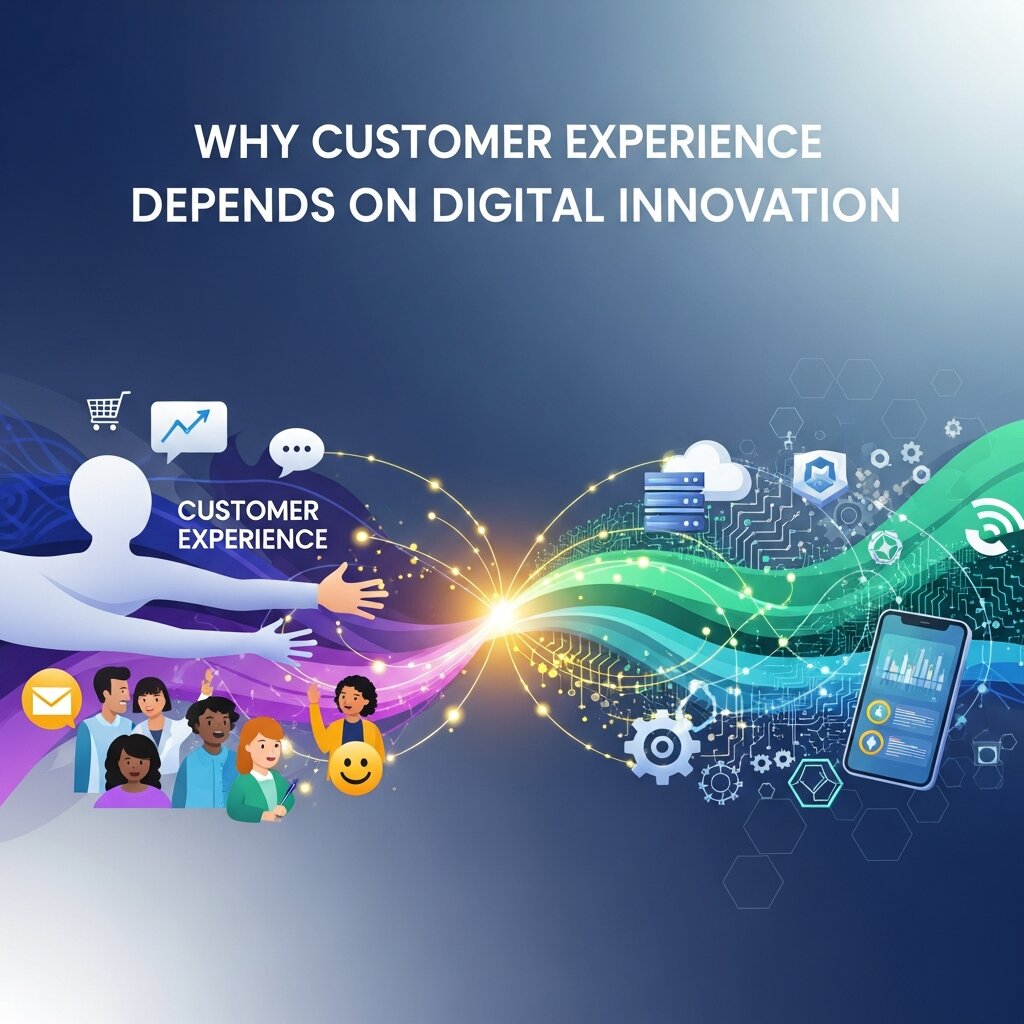 Customer experience covers every interaction a person has with your brand, from the first ad they see to the support call they make months later. When even one of those moments feels clunky or frustrating, trust takes a hit.
Digital innovation smooths out these rough edges. It removes friction, anticipates needs, and gives customers control over how they engage with a company. Here’s how this plays out in practice.
Faster, More Convenient Service
Speed matters. Research consistently shows that customers abandon slow websites and long phone queues. Digital tools like self-service portals, mobile apps, and automated checkouts let people get what they want without waiting.
Think about how rarely you visit a physical bank branch today. Mobile deposits, instant transfers, and digital wallets have made banking something you can do from your couch in under a minute. That convenience keeps customers loyal.
Personalization at Scale
A decade ago, personalization meant adding a customer’s first name to an email. Today it means recommending the exact product someone is likely to want, based on their browsing history, past purchases, and even the time of day.
Streaming services, online retailers, and news platforms all use data to tailor what you see. When done well, this personalization feels helpful rather than intrusive. It signals that a brand understands you—and that understanding builds lasting relationships.
Consistency Across Channels
Customers move between devices and platforms constantly. They might start browsing on a phone during their commute, add items to a cart on a laptop at work, and complete the purchase on a tablet at home.
Digital innovation ties these touchpoints together. A unified system remembers where a customer left off, so the experience feels seamless no matter where they pick it back up. This omnichannel approach has become a baseline expectation rather than a luxury.
Business Banking Innovation as a Case Study
 Few industries illustrate the power of digital transformation better than finance. Business banking innovation has completely changed how companies manage money, apply for credit, and plan for growth.
In the past, opening a business account or applying for a loan meant stacks of paperwork and weeks of waiting. Now, digital-first banks let business owners open accounts in minutes, track cash flow in real time, and access lending decisions almost instantly.
Real-Time Financial Insights
Modern banking platforms give business owners dashboards that show exactly where their money is going. Instead of waiting for monthly statements, they get up-to-the-minute data on spending, revenue, and outstanding invoices.
This visibility helps owners make smarter decisions. They can spot cash-flow problems early, plan for slow seasons, and reinvest profits with confidence. The bank becomes a partner rather than just a place to store money.
Automated and Integrated Tools
Business banking innovation also means connecting financial services to the other tools a company already uses. Accounting software, payroll systems, and invoicing platforms can all sync with a banking app.
This integration reduces manual data entry, cuts down on errors, and saves owners hours each week. The result is an experience that feels effortless—exactly the kind of value digital innovation is meant to deliver.
How Different Industries Apply Digital Innovation
The principles behind digital business and innovation apply far beyond banking and retail. Almost every sector can find ways to use technology to serve customers better.
Retail and E-Commerce
Online stores use augmented reality to let shoppers “try on” clothes or preview furniture in their homes. Smart inventory systems prevent the disappointment of out-of-stock items. Quick, transparent shipping updates keep customers informed every step of the way.
Healthcare
Telehealth appointments let patients consult doctors without leaving home. Digital records mean a physician can pull up your full history in seconds. Reminder apps help people stay on top of medications and follow-up visits.
Home and Lifestyle Services
Even traditionally hands-on industries have gone digital. Landscaping companies now offer apps where customers can browse innovative garden ideas, request quotes, and schedule maintenance with a few taps. Smart irrigation systems water plants automatically based on weather data, blending physical service with digital convenience.
These examples show that no industry is too “offline” to benefit from innovation. The common thread is using technology to remove hassle and add value.
Practical Steps to Drive Innovation in Your Business
Understanding the value of digital business and innovation is one thing. Putting it into practice is another. Here are concrete steps any organization can take to start improving customer experience through technology.
Start With the Customer, Not the Tool
It’s tempting to chase the latest shiny technology. But the most successful innovations begin with a clear customer problem. Ask your customers where they feel friction, then look for tools that solve those specific pain points.
Use Data Wisely
Collect feedback, track behavior, and analyze patterns. Data reveals what customers actually want, not just what you assume they want. Just be sure to handle that data responsibly and transparently—trust is fragile, and a single privacy misstep can undo years of goodwill.
Test Small, Then Scale
You don’t need to overhaul everything at once. Pick one process, improve it with a digital tool, and measure the results. If it works, expand. This approach lowers risk and lets you learn as you go.
Invest in Your Team
Technology is only as good as the people using it. Train your staff, encourage experimentation, and reward fresh thinking. A culture that welcomes innovative product ideas will keep finding new ways to delight customers long after a single project ends.
Keep the Experience Human
Automation is powerful, but customers still crave genuine connection. The best digital experiences know when to hand off to a real person. Balance efficiency with empathy, and you’ll create interactions that feel both smooth and sincere.
The Future of Customer Experience
Looking ahead, the line between digital and physical experiences will continue to blur. Voice assistants, predictive AI, and connected devices will make interactions even more intuitive. Customers will expect brands to anticipate their needs before they even voice them. The companies that thrive will be those that treat innovation as an ongoing journey rather than a one-time project. They’ll keep listening, keep experimenting, and keep refining. Most importantly, they’ll never lose sight of the human being on the other side of the screen.
Building a Culture of Continuous Innovation
 Technology alone doesn’t create innovation—people do. Businesses that consistently deliver exceptional customer experiences foster a culture where employees are encouraged to share ideas, experiment with new approaches, and embrace change. Leaders play a critical role by promoting collaboration, investing in employee training, and creating an environment where calculated risks are welcomed rather than avoided. Cross-functional teams can combine different perspectives to solve customer challenges more effectively, while regular feedback from both employees and customers helps refine new initiatives. Continuous learning and improvement ensure that innovation becomes an ongoing process instead of a one-time project. By embedding innovation into the company’s culture, organizations become more adaptable, respond faster to market changes, and consistently deliver experiences that strengthen customer satisfaction, loyalty, and long-term business growth.
Frequently Asked Questions
1. What is digital business and innovation?
Digital business and innovation involve using digital technologies to improve business operations, create better customer experiences, and develop new products, services, or business models. It combines technology with creative thinking to help businesses stay competitive and adapt to changing customer needs.
2. Why is digital innovation important for customer experience?
Digital innovation improves customer experience by making interactions faster, more personalized, and more convenient. Technologies like AI, mobile apps, automation, and data analytics help businesses provide seamless services that increase customer satisfaction and loyalty.
3. How can small businesses benefit from digital business and innovation?
Small businesses can use digital tools to automate repetitive tasks, improve customer communication, reduce operating costs, and expand their online presence. Even simple solutions such as online booking systems, digital payments, or CRM software can significantly improve efficiency and customer engagement.
4. What technologies are driving digital business innovation?
Some of the most influential technologies include artificial intelligence (AI), cloud computing, data analytics, automation, the Internet of Things (IoT), mobile applications, machine learning, and customer relationship management (CRM) platforms. These technologies enable businesses to operate more efficiently and deliver better customer experiences.
5. What is business banking innovation?
Business banking innovation refers to the use of digital technology to improve financial services for businesses. Examples include mobile banking apps, automated expense tracking, real-time financial dashboards, digital lending, online account management, and integrations with accounting software to simplify financial operations.
6. How does digital transformation improve customer loyalty?
Digital transformation enhances customer loyalty by providing faster service, personalized recommendations, consistent experiences across multiple channels, and easier access to products or services. When customers consistently have positive experiences, they are more likely to trust and remain loyal to a brand.
7. How can a business start its digital innovation journey?
Businesses should begin by identifying customer pain points and evaluating existing processes. From there, they can prioritize areas where technology can create the greatest impact, implement small improvements, measure results, and gradually expand their digital transformation efforts as they gain experience.
8. What challenges do businesses face during digital transformation?
Common challenges include resistance to change, limited budgets, outdated systems, cybersecurity concerns, lack of employee training, and integrating new technologies with existing processes. Careful planning, leadership support, and ongoing training can help overcome these obstacles.
9. How do businesses measure the success of digital innovation?
Success can be measured using key performance indicators such as customer satisfaction, retention rates, operational efficiency, website traffic, conversion rates, revenue growth, employee productivity, and return on investment (ROI). Regular analysis helps businesses refine their digital strategies over time.
10. Is digital business and innovation only for large enterprises?
No. Businesses of every size can benefit from digital innovation. Many affordable cloud-based tools and software solutions allow startups and small businesses to automate processes, improve customer experiences, and compete effectively without requiring large technology budgets.
Turning Innovation Into Lasting Loyalty
Digital business and innovation have transformed customer experience from a nice-to-have into a competitive necessity. Faster service, smart personalization, and seamless cross-channel journeys are no longer optional—they’re what customers expect.
The good news is that you don’t need a massive budget to begin. Start by listening to your customers, identifying their biggest frustrations, and testing one digital solution at a time. Whether you’re exploring business banking innovation, rolling out fresh innovative product ideas, or even helping customers visualize innovative garden ideas, the goal stays the same: make every interaction easier, faster, and more meaningful. Take the first step today. Pick one customer pain point, find a tool that solves it, and watch how a small change can spark lasting loyalty.

Leave a Reply