


Most companies treat innovation like a fire drill. They scramble when sales dip, throw money at a new product, then return to business as usual once the numbers recover. This stop-start approach rarely works. The businesses that consistently outperform their competitors don’t innovate in bursts—they make it a daily habit.
The link between innovation and business performance is well established. Firms that build innovation into their operations grow faster, adapt quicker, and hold onto customers longer. But here’s the catch: innovation isn’t a one-time project you can check off a list. It’s a mindset that needs to run through every department, from product development to customer service.
This post breaks down what continuous innovation actually looks like, why it matters for your bottom line, and how you can build it into the fabric of your organization. You’ll walk away with practical steps you can start applying right away, whether you run a small startup or manage a team within a larger company.
What Continuous Innovation Really Means
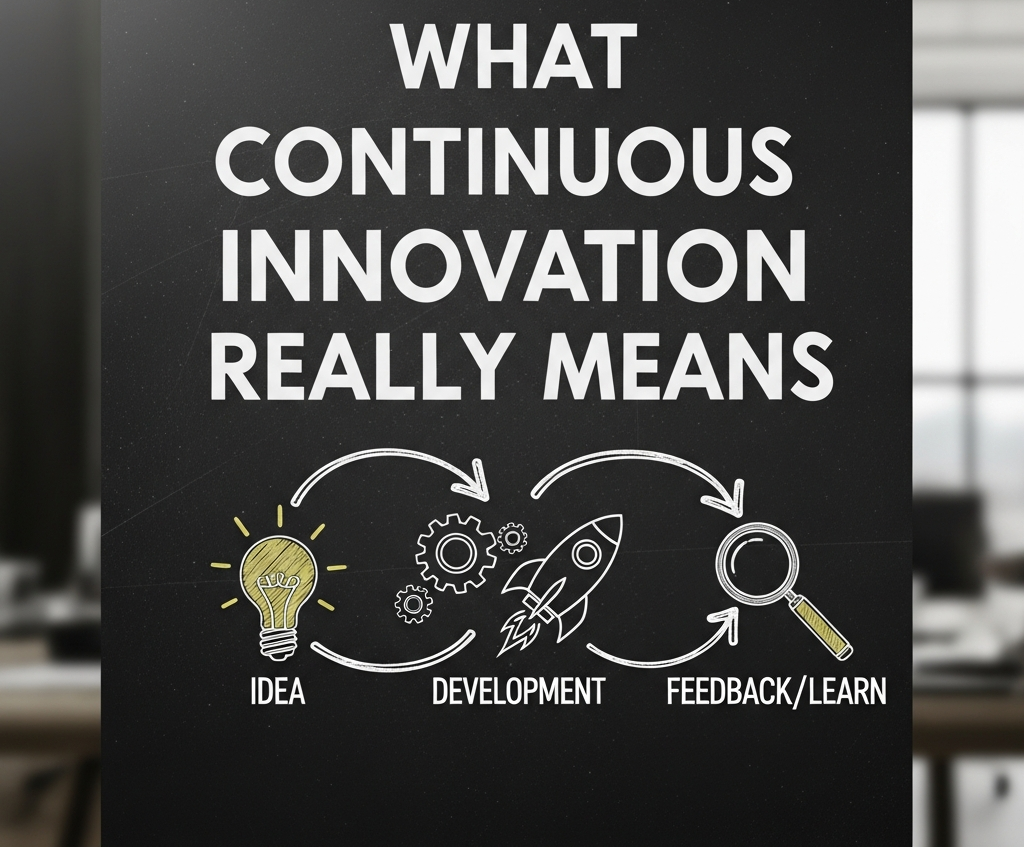 Continuous innovation is the ongoing process of improving products, services, and internal processes over time. Instead of waiting for one big breakthrough, you make steady, incremental improvements while staying open to bigger leaps when the moment is right.
Think of it as the difference between a sprinter and a marathon runner. A sprinter gives everything in short, intense bursts. A marathon runner paces themselves, adjusting constantly to keep moving forward. Continuous innovation is the marathon approach—sustainable, consistent, and built for the long haul.
This doesn’t mean every idea has to be revolutionary. Some of the most valuable innovations are small tweaks that compound over time. A slightly faster checkout process, a clearer onboarding email, a smarter way to handle returns—these add up. The goal is to create an environment where improvement never stops.
Why Innovation Fuels Business Performance
The connection between innovation and business performance shows up in several concrete ways. When you commit to constant improvement, you set off a chain reaction that touches nearly every part of your operation.
You stay ahead of changing customer needs
Customer expectations shift constantly. What delighted them last year might frustrate them today. Businesses that innovate continuously keep their finger on the pulse, spotting changes early and responding before competitors do. This responsiveness builds loyalty and keeps customers coming back.
You attract and keep top talent
Talented people want to work somewhere that values fresh thinking. A culture of innovation signals that ideas matter and that employees have room to grow. This makes recruitment easier and reduces turnover—two factors that directly affect your costs and performance.
You build resilience against disruption
Markets change fast, and entire industries can be upended overnight. Companies that treat innovation as routine are better equipped to pivot when disruption hits. They’ve already built the muscles needed to adapt, so a sudden shift feels less like a crisis and more like a challenge they’re ready for.
You open new revenue streams
Continuous innovation often uncovers opportunities you didn’t know existed. A small improvement in one area can reveal an entirely new market or product line. Over time, these discoveries diversify your income and reduce your dependence on any single source of revenue.
How to Build Continuous Innovation Into Your Business
 Knowing that innovation matters is one thing. Actually making it part of how you operate is another. Here are practical strategies to turn innovation from an occasional event into a steady habit.
Create a culture that welcomes ideas
Innovation dies in cultures where people fear failure. If employees worry about being punished for ideas that don’t work out, they’ll stop sharing them. Build a workplace where experimentation is encouraged and where failed attempts are treated as learning opportunities rather than mistakes.
Start by asking for input regularly. Hold brainstorming sessions where no idea is too odd to mention. You might be surprised where good ideas come from. Even something as playful as brainstorming innovative birthday card ideas for a colleague can warm people up to creative thinking and show that fresh ideas are welcome at every level.
Set aside dedicated time and resources
Innovation rarely happens when everyone is buried in daily tasks. To make it stick, you need to carve out time specifically for exploring new ideas. Some companies give employees a percentage of their work hours to pursue passion projects. Others schedule regular innovation days or workshops.
You don’t need a massive budget to get started. Even small investments—a few hours a week, a modest experimentation fund—can yield meaningful results when applied consistently.
Listen closely to your customers
Your customers are a goldmine of innovation ideas. They use your products every day and know exactly where the friction lies. Set up easy ways for them to share feedback, then actually act on what they tell you.
This feedback loop is often where innovative product ideas are born. A complaint about a missing feature, a request for a new option, a workaround a customer invented on their own—each one points toward a possible improvement. The businesses that listen carefully tend to develop products that fit their market like a glove.
Embrace small experiments
You don’t have to bet the company on every new idea. Instead, run small, low-risk experiments to test whether something works before scaling it up. This approach limits your downside while still giving you room to discover what resonates.
Pick one change, try it with a small group of customers, and measure the results. If it works, expand it. If it doesn’t, you’ve learned something valuable without a major loss. This test-and-learn rhythm keeps innovation flowing without exposing you to unnecessary risk.
Look for inspiration outside your industry
Some of the best ideas come from unexpected places. A retail business might learn something from how a restaurant handles reservations. A software company might borrow a customer service technique from a hotel chain.
Encourage your team to look beyond your own field. Even unrelated areas can spark useful thinking. Browsing through innovative garden ideas might seem irrelevant to running a tech firm, but the principles of clever design, efficient use of space, and creative problem-solving translate across nearly any context. Cross-pollination of ideas is one of the most reliable ways to stay fresh.
Measuring the Impact of Your Innovation Efforts
Innovation without measurement is just guesswork. To know whether your efforts are paying off, you need to track the right metrics and adjust your approach based on what the data tells you.
Start by defining what success looks like for each initiative. Are you trying to increase customer satisfaction? Reduce costs? Boost revenue from a new product? Tie each innovation to a clear, measurable goal so you can judge its effect.
Common metrics worth tracking include:
- Revenue from new products or services introduced in the past year
- Customer retention rates before and after key improvements
- Time to market for new ideas
- Employee engagement scores related to innovation
- Return on investment for specific projects
Review these numbers regularly. If an initiative isn’t moving the needle, don’t be afraid to drop it and redirect your energy elsewhere. The point of continuous innovation is to keep improving—and that includes improving how you innovate.
Common Roadblocks and How to Overcome Them
Even with the best intentions, businesses run into obstacles when trying to innovate consistently. Recognizing these roadblocks early makes them far easier to clear. The first is resistance to change. People naturally prefer what’s familiar, so new ideas often meet pushback. The fix is communication—explain the why behind each change and involve people early, so they feel ownership rather than imposition.
The second is short-term thinking. When quarterly targets dominate, long-term innovation gets squeezed out. Balance immediate goals with investments that pay off down the road, and protect your innovation budget from being raided whenever times get tight. The third is siloed teams. Innovation thrives when ideas flow freely across departments. If your teams rarely talk to each other, good ideas get stuck. Break down those walls with cross-functional projects and shared goals that force collaboration.
The Role of Leadership in Continuous Innovation
 Leadership plays a critical role in shaping and sustaining a culture of continuous innovation within an organization. When leaders support experimentation and open communication, employees feel confident sharing ideas and testing new approaches. Effective leaders not only approve innovation initiatives; they model innovative thinking in their own decisions and behaviors. They also allocate resources, remove barriers, and ensure innovation aligns with business goals.
By setting clear expectations and rewarding creative problem-solving, leadership helps transform innovation from an occasional effort into a consistent practice. Without strong leadership commitment, even good ideas often fail to move beyond discussion. Ultimately, leaders act as catalysts who turn innovation into a structured, repeatable process that drives long-term performance and resilience across the whole organization.
Technology as an Enabler of Continuous Innovation
Technology is a powerful driver of continuous innovation, enabling businesses to experiment, iterate, and scale improvements faster than ever before. Digital tools such as data analytics platforms, automation systems, and AI-powered insights help organizations identify patterns, customer behaviors, and operational inefficiencies in real time. This allows decision-makers to act quickly and test new ideas with minimal risk.
Cloud computing and collaboration tools also break down geographical and departmental barriers, making it easier for teams to work together on innovative solutions. Additionally, technology reduces the cost of experimentation, allowing businesses to run multiple small tests instead of relying on expensive, high-risk projects. Ultimately, technology turns innovation into a continuous, scalable process that improves performance and drives long-term growth across the organization.
Frequently Asked Questions (FAQ)
1. What is continuous innovation in business?
Continuous innovation is the ongoing process of making improvements to products, services, processes, and customer experiences. Rather than relying on occasional breakthroughs, businesses focus on consistent enhancements that help them stay competitive and adapt to changing market conditions.
2. How does innovation improve business performance?
Innovation improves business performance by increasing efficiency, enhancing customer satisfaction, creating new revenue opportunities, and helping organizations respond quickly to market changes. Businesses that innovate regularly often achieve stronger growth and long-term success.
3. Why is continuous innovation important for long-term growth?
Continuous innovation allows companies to evolve with customer needs, industry trends, and technological advancements. This proactive approach helps organizations remain relevant, avoid stagnation, and maintain a competitive advantage over time.
4. Can small businesses benefit from innovation?
Yes. Innovation is not limited to large corporations. Small businesses can improve operations, enhance customer experiences, and identify new market opportunities through incremental changes and creative problem-solving, often with minimal investment.
5. What are some examples of continuous innovation?
Examples include improving website navigation, streamlining customer support processes, introducing new product features, automating repetitive tasks, and refining marketing strategies based on customer feedback and performance data.
6. How can companies encourage a culture of innovation?
Organizations can foster innovation by encouraging employee input, rewarding creative thinking, supporting experimentation, promoting collaboration, and creating a safe environment where people can learn from failures without fear of punishment.
7. What role do customers play in innovation?
Customers provide valuable insights into product performance, pain points, and unmet needs. By actively collecting and acting on customer feedback, businesses can identify opportunities for meaningful improvements and innovation.
8. How can businesses measure the success of innovation initiatives?
Businesses can track metrics such as revenue growth, customer retention, employee engagement, operational efficiency, time-to-market, and return on investment (ROI) to evaluate the effectiveness of their innovation efforts.
9. What are the biggest challenges to continuous innovation?
Common challenges include resistance to change, limited resources, short-term business pressures, lack of leadership support, and poor communication between departments. Addressing these barriers is essential for sustaining innovation.
10. How can businesses start implementing continuous innovation today?
Businesses can begin by identifying one area for improvement, gathering customer and employee feedback, testing small changes, measuring results, and creating a structured process for ongoing experimentation and learning.
Making Innovation a Lasting Habit
Continuous innovation isn’t a strategy you adopt once and forget. It’s a discipline you practice every day, refining your approach as you learn what works for your specific business. The companies that get this right don’t just survive—they set the pace for everyone else.
Start small. Pick one area where you can make a steady improvement, build a feedback loop around it, and measure the results. Once that becomes second nature, expand to another area. Over time, these habits compound into a genuine culture of innovation that lifts your business performance across the board. The competitive edge goes to businesses that never stop improving. Make innovation part of your daily routine, and you’ll be ready for whatever the market throws your way.

Leave a Reply